


Therapy, Assistance, & Emotional Support Animals
What’s the difference between therapy work, service work, and emotional support work?
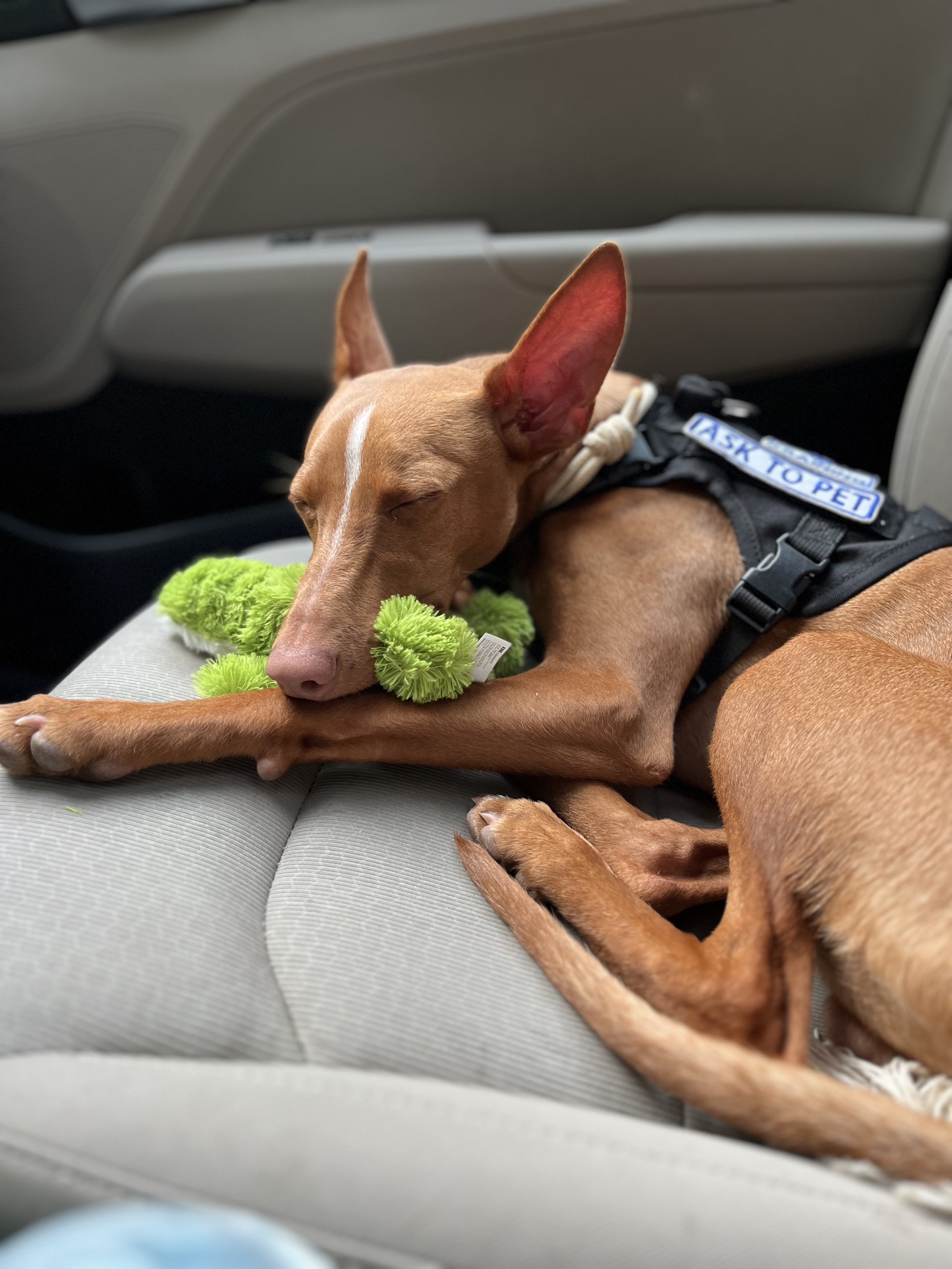
There is a difference between each, legally or otherwise!


Service Animals: are dogs or miniature horses trained to perform specific tasks according to the disability of their handler. The United States does not have any “certification” for this; if you encounter a trainer saying they can “certify” your dog for service work, do not fall for the trick. The ADA states the following for service work:
Owners of Service Dogs (or in rare cases Miniature Horses) are individuals with diagnosed disabilities, whether that be physical or mental.
Service Dogs must be housebroken, under control, and trained for tasks specific to their owner.
Therapy Animals: are animals that have the temperament and training required for comforting those in need. There are a few kinds of therapy dog work:
AAA (Animal Assisted Activities): is informal comfort work typically facilitated by therapy dog organizations, where trained dogs visit schools, universities, retirement homes, hospitals, or even disaster zones (though this is a more rigorous training process).
AAI (Animal Assisted Intervention): is like AAA, but with more therapeutic goals in mind. Some K12 schools have therapy dogs for children with autism or in distress, and many programs focus on “reading partner” dogs.
AAT (Animal Assisted Therapy): is facilitated by a licensed psychologist or therapist that utilizes a therapy dog as part of their treatment plan.
Emotional Support Animals: are animals that provide comfort for their owners without any formal training. Some states specify that individuals with ESAs must have a diagnosed disability, but this is an inconsistent law. ESAs can be dogs, cats, horses, birds, etc; I believe nearly any animal can qualify as emotional support. Some laws specify which animals qualify (which is, again, inconsistent). ESAs are also not always allowed on airplanes or public spaces, whereas service animals always are.
See any similarities?
Diagnosed Disabilities & Licensure
Service animals require a diagnosis, while AAT work requires a licensed psychologist. ESAs and other therapy dogs require no diagnosis or certified psychologist.
Specified Animals
Only dogs and miniature horses are federally recognized as acceptable service animals. ESAs can be any animal. Therapy animals are typically dogs, but can be cats, too!
Inconsistent Laws
The US fortunately has the federally enforced ADA (Americans with Disabilities Act), but as far as legal “certification” goes, we have none for service, therapy, and emotional support — as well as the trainers that teach the dogs.
What does the training entail?
What should you expect from therapy dog training?
1. Consult.
We will meet for a Therapy Dog Consult and I will tell you all the information you need, all while conducting an observation on your dog’s behavior, comfort levels, and training (no pressure for what is and is not learned! I am just looking for a starting point.)
2. Training plan.
We will collaboratively put a training plan together with what works best for your schedule and comfort level. This includes more formal obedience training as well as exposure and comfort training.
3. Training!
The fun part! Based on our training plan, we may meet to go on outings into dog-friendly stores, public parks, trails, or within your home.
4. Completion.
Start your work independently or apply to an organization!
Let’s Work TogetherIf you're interested in working with us, complete the form with a few details about you and your pet. We'll review your message and get back to you within 48 hours.