

Free Resources
My Most Used References
-
![]()
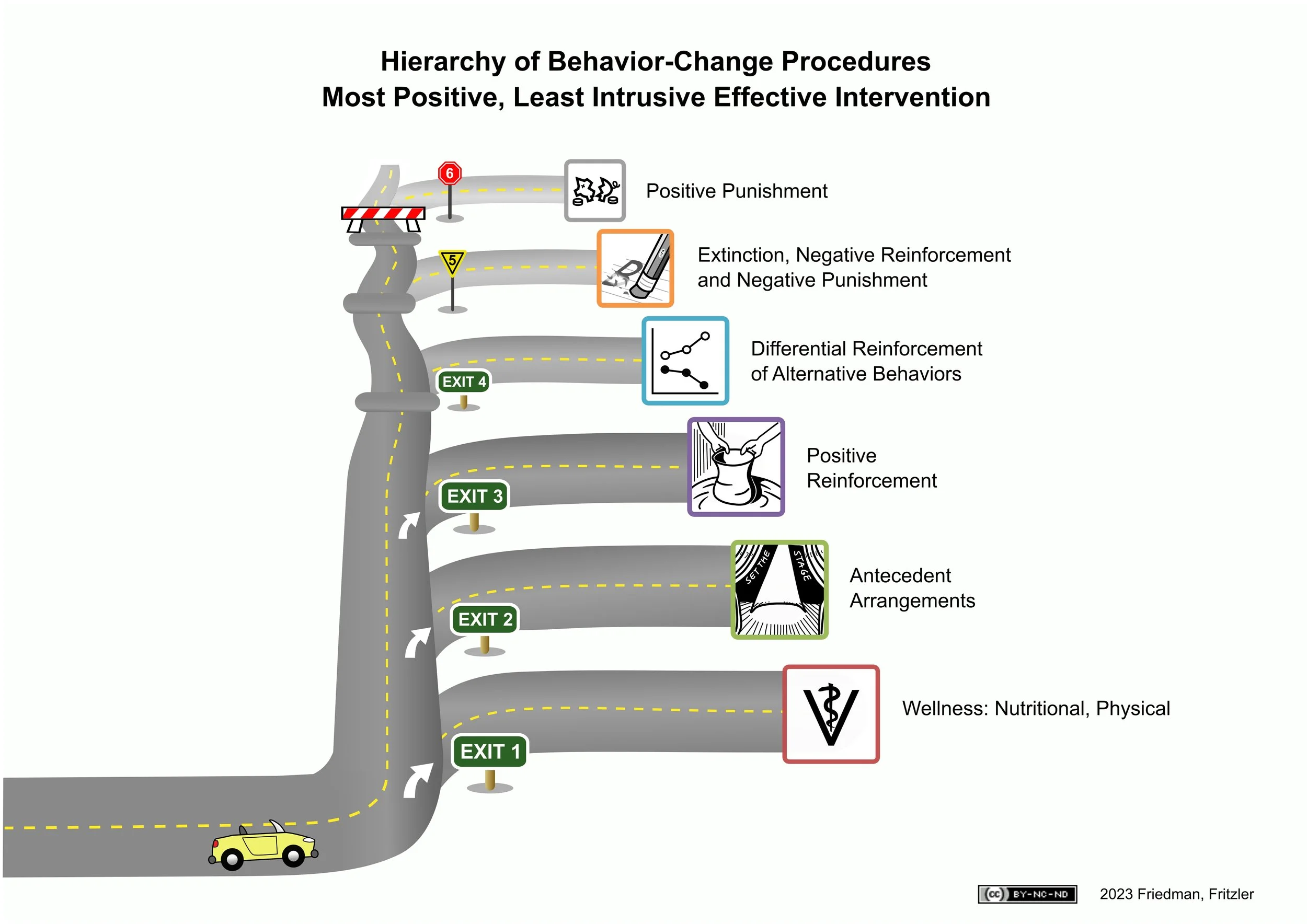
Hierarchy of Behavior-Change Procedures
Dr. Susan Friedman, one of the foundational behaviorists in this field, first made this hierarchy image based on least-intrusive methods used in the special education field. It focuses first on the health and wellness of the animal, and then moves onto the environment of the animal, and only then does any potential training start.
Check out her website Behavior Works
-
![]()
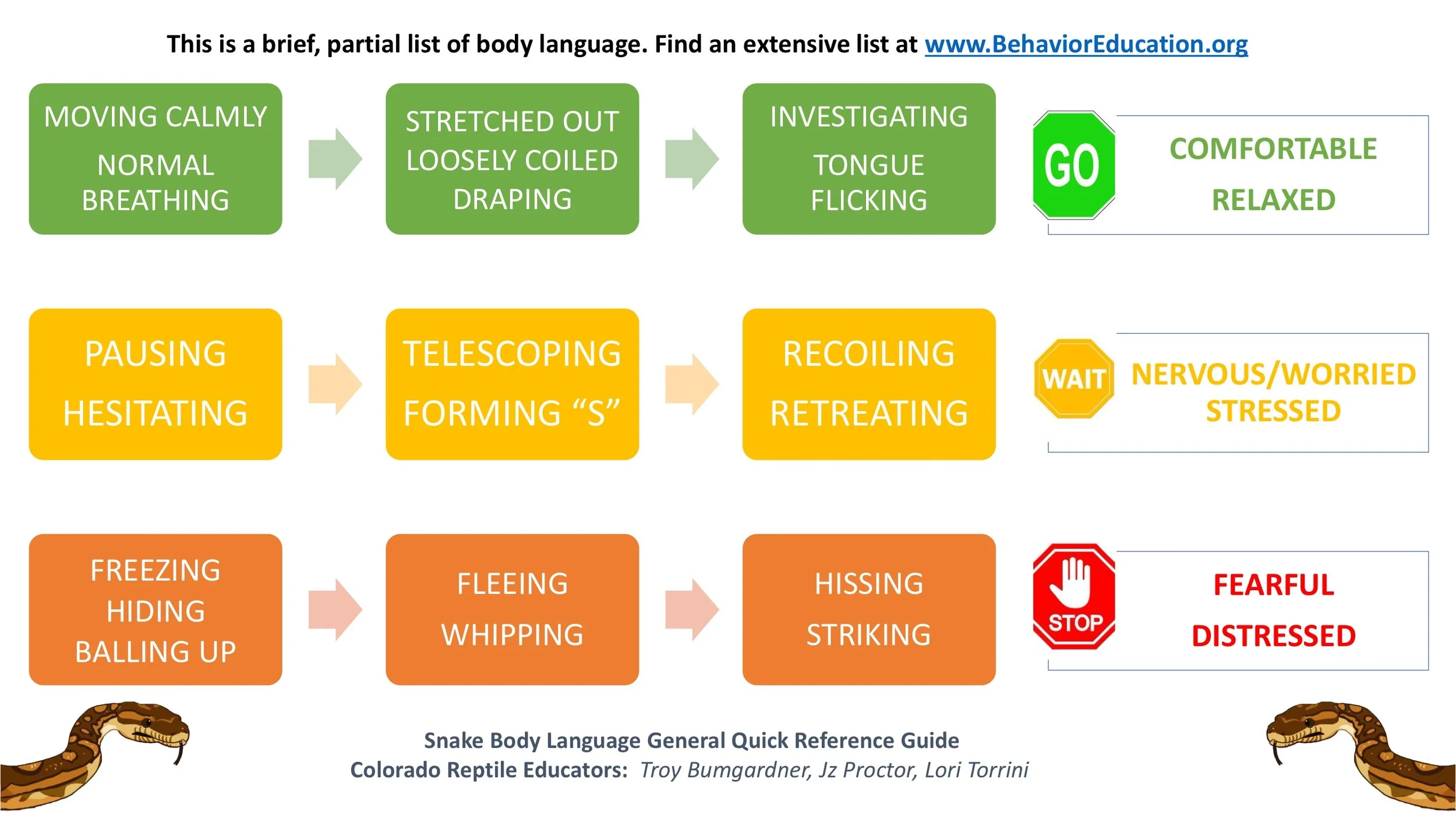
Reptile Body Language
Although more species-specific, it is a very good starting place when working with reptiles, especially snakes.
From Behavior Education
-
![]()
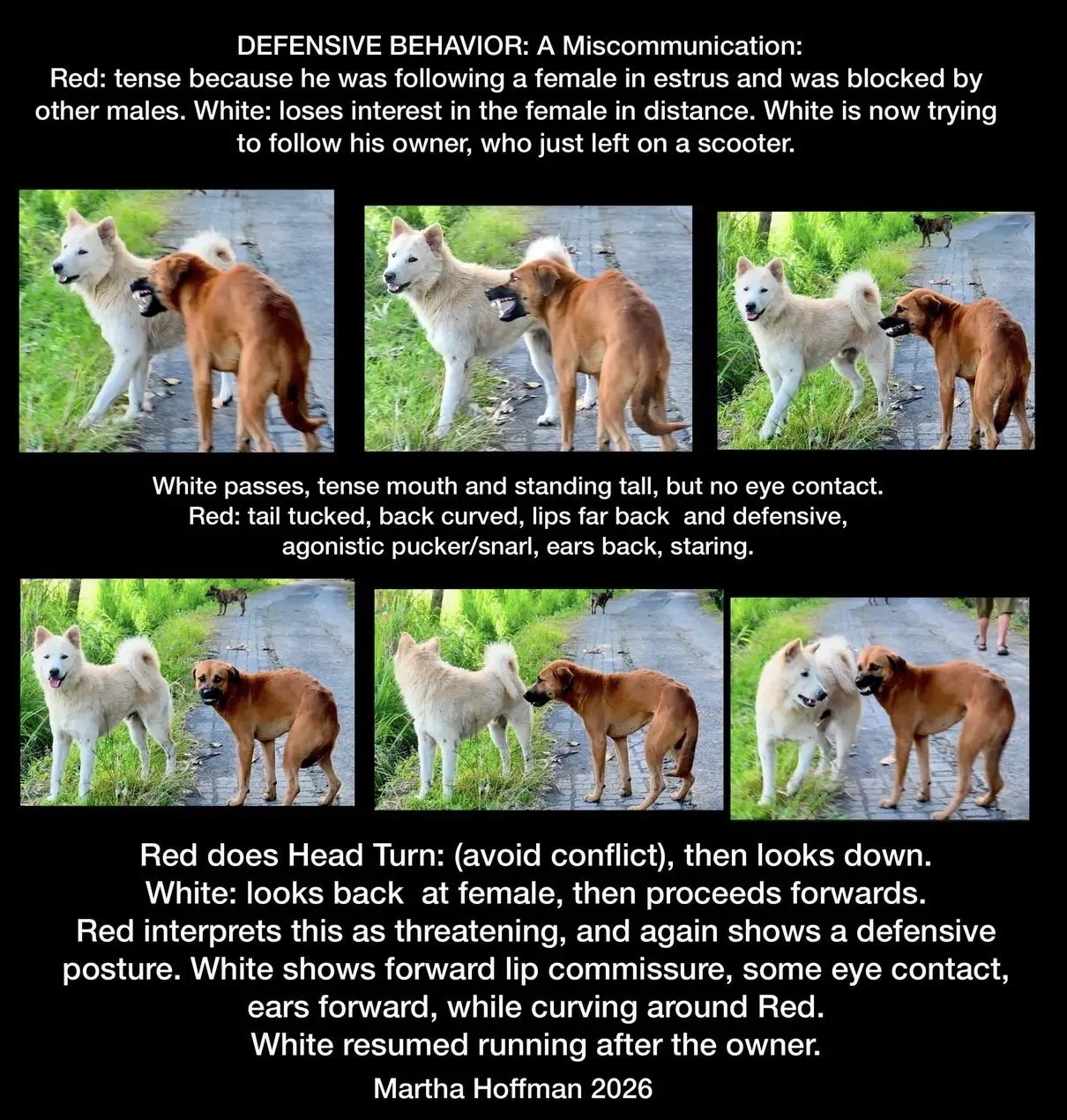
Canine Body Language
Martha Hoffman has an excellent Facebook page breaking down the behavior of street dogs in Bali, Indonesia. Although some of these dogs have more primitive behaviors, street dogs are excellent examples of healthy canine body language because they are not confined by humans, and can choose their own decisions almost all the time.
Check out Martha Hoffman’s page
-
![]()
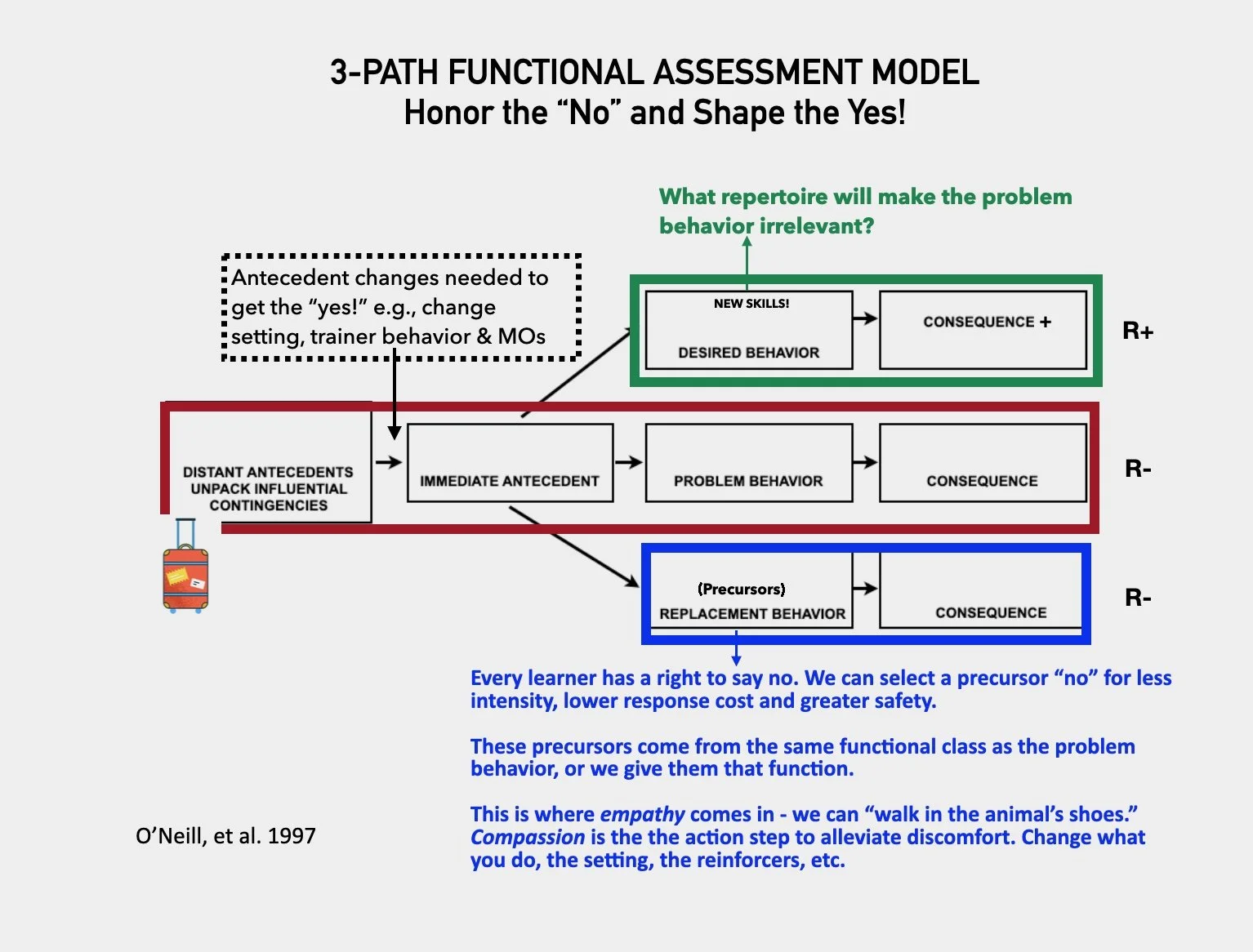
Honor the “No”
Once again, a diagram from Dr. Susan Friedman. One of her common phrases, “Honor the No”, is a very important way to look at animal behavior and wellbeing.
-
![]()
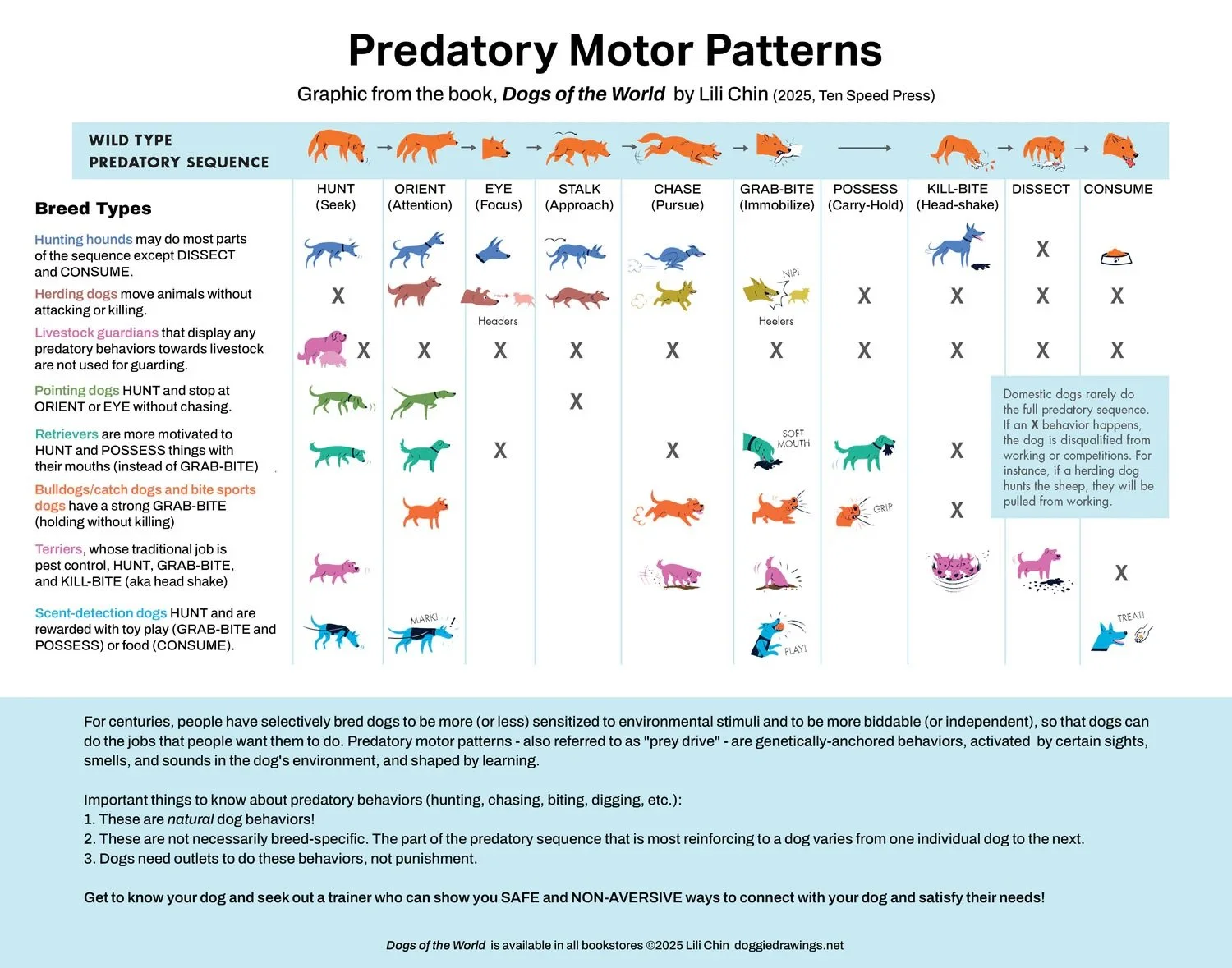
Predatory Motor Patterns
When it comes to managing and understanding dog behavior, this is my GO-TO reference. Domestic dogs are the most behaviorally diverse of any animal on Earth, and breed type MATTERS!
From the incredible Lili Chin
-
![]()
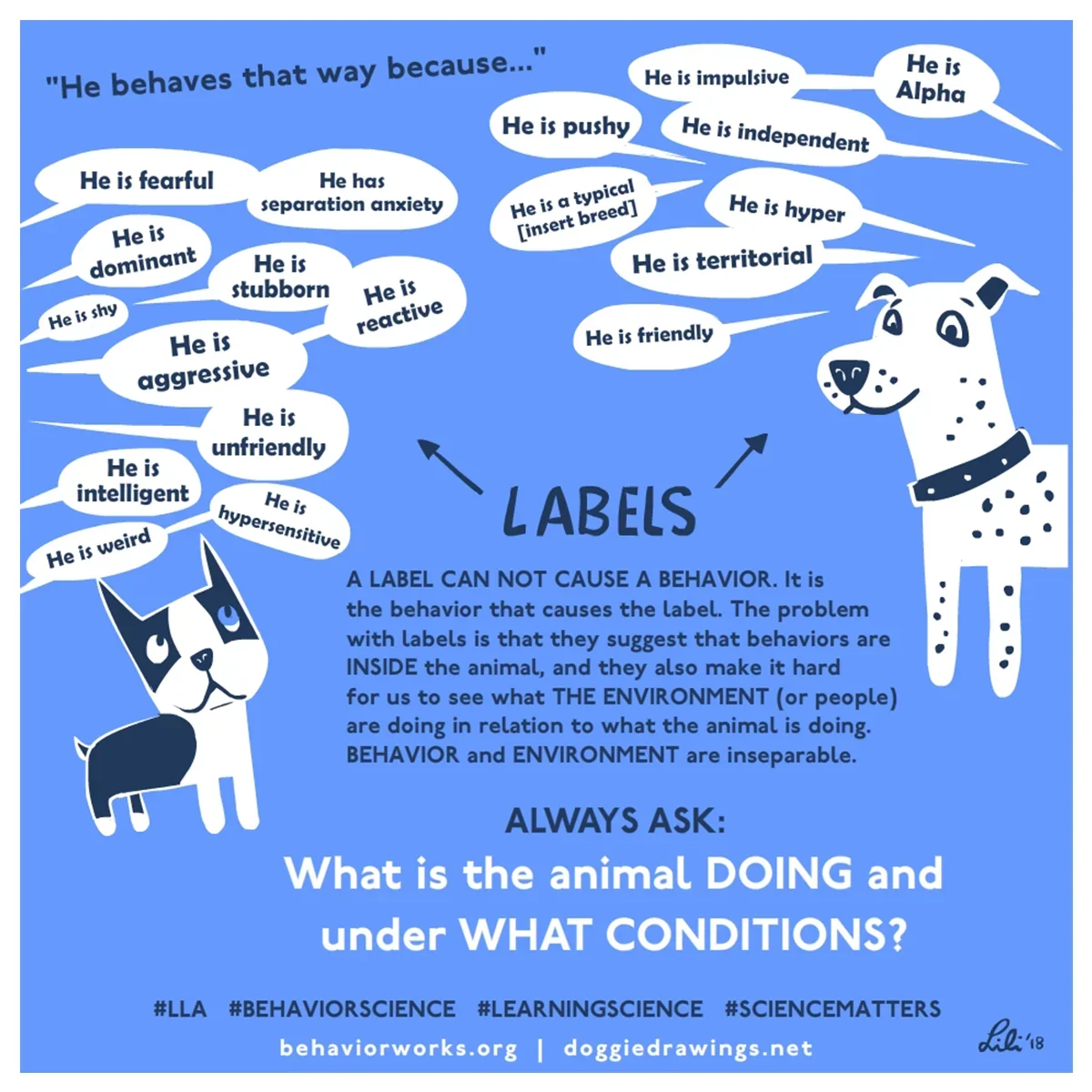
Leave the Labels Behind!
Making blanket statements like “my dog doesn’t like other dogs” or “my dog is dominant/submissive” doesn’t ever give the dog a chance to change — or for you to understand your dog’s behavior in different contexts.
Again, from Lili Chin
-
![]()
New List Item
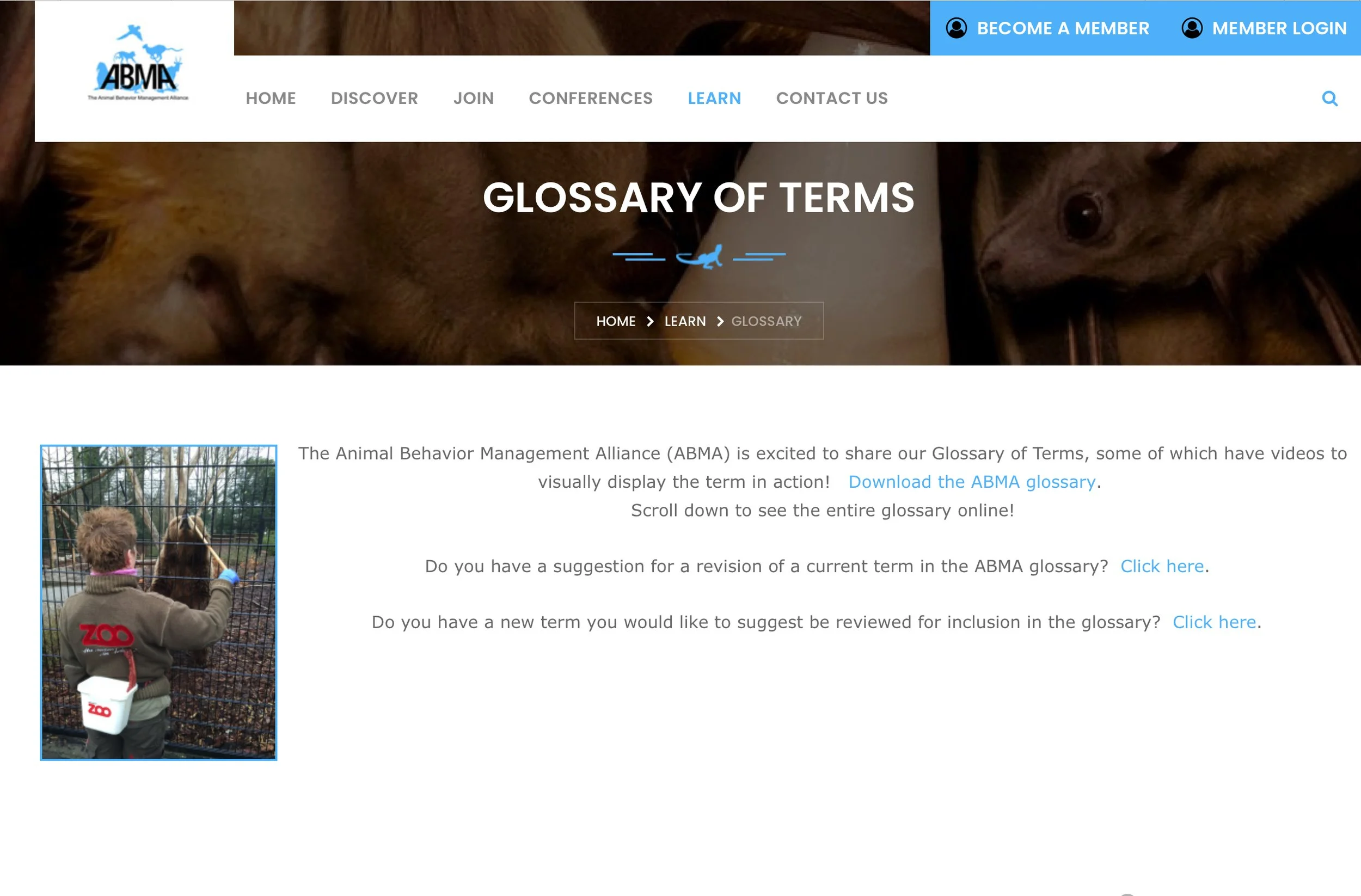
The full Glossary of Terms from the ABMA (Animal Behavior Management Alliance) — very helpful if you need the definition of a training/welfare term or just want to better understand some terminology. Click Command F on your computer to look up a specific word.
As my training methods revolve around each dog’s historical purpose and breed type, this page provides somewhere to start:

Terriers

Collies and Sheepdogs

Spaniels, Setters, and Retrievers

Bull Breeds

Companion & Toy Breeds

Mastiffs

Scenthounds

Sighthounds

Spitz and Sled Dogs